
Poverty & Freedom: Case Studies on Global Economic Development
The traditional approach to solving poverty has failed.
What can we do instead? As experts try to work out how to solve the problem of foreign aid inefficacy, local think tanks committed to removing institutional barriers to economic opportunity have become more effective in leading locally relevant change. Poverty & Freedom shares case studies from around the globe, drawing on multidisciplinary insights to make the case for redirecting philanthropic support to high-performing think tanks in the quest to end poverty for good.
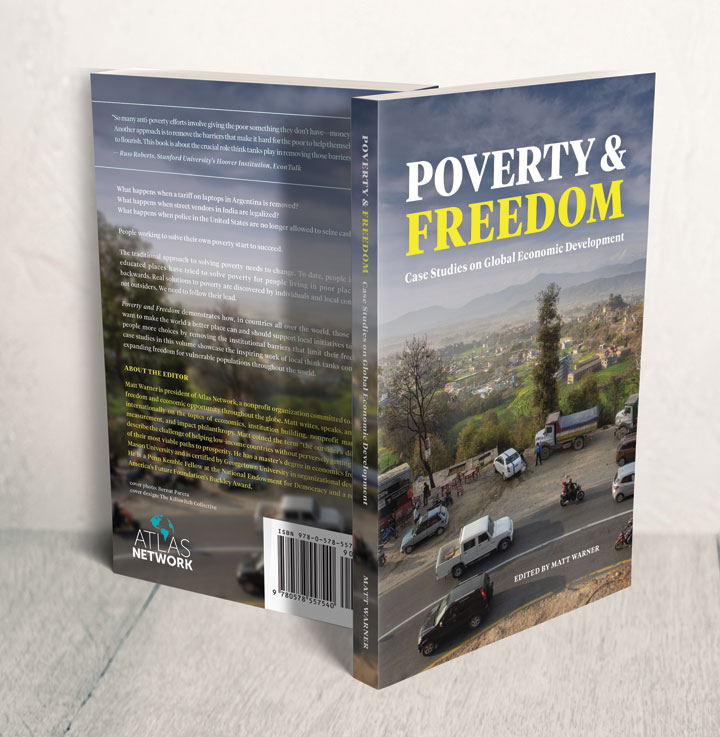
Poverty & Freedom, a new book edited by Atlas Network president Matt Warner, demonstrates how making the world more prosperous starts with supporting locally-led initiatives that remove institutional barriers to freedom and give people greater choices over their own future.
Governments and well-meaning philanthropists continue to spend billions of dollars on foreign-led interventions that prop up the traditional model of international development. But real solutions to poverty are worked out by people with a vision of change that is rooted in a local understanding of sustainable growth. The freedom to grow and develop is enhanced by the crucial knowledge and leadership that only local people can provide—and this is the model that can create a lasting exodus from poverty. The thirteen case studies in Poverty & Freedom showcase the inspiring work of local think tanks that are committed to expanding freedom for vulnerable populations by fighting government abuse, making legal markets more inclusive, and removing other barriers to opportunity all over the world.
“In every country there are barriers—unfair laws, corrupt practices, unworkable bureaucracies—that disproportionately harm low-income people,” explains Warner. “Outsiders have a lot of ideas about how to fix those problems, but the more effective approach is to support local visionaries who better understand what needs to change, how to change it, and how to communicate the benefits of those changes to local stakeholders.”
Drawing on a diversity of thought leadership from academics and practitioners in the international aid community, Poverty & Freedom invites consensus on a new philanthropic approach to economic development, one that turns attention away from the traditional foreign aid model and instead emphasizes voluntary support for local change organizations focused on expanding economic opportunity for low-income populations.
Article first published on Dignity Unbound blog.
You May Like
Religion in Government
[vc_row][vc_column offset="vc_col-lg-offset-0 vc_col-xs-offset-1 vc_col-xs-1"][vc_column_text] The nomination of a devoutly Catholic federal judge to fill the latest vacancy on the United States Supreme Court has brought back into the spotlight a question that has roiled American public life since the nation’s founding: What is the proper role of religion in our
Tickets on Sale Now! Sponsorships Still Available
My 2018 Acton University Experience
Carmen Salomé is the Freedom & Virtue Institute's Immediate Past Board President and currently serves on the FVI Board. She is very active in our local SW Florida Community. I had the outstanding opportunity to attend Acton University again this year. I received a "Latino Leadership" fellowship granted by the Kern Family