
Victimhood Does Not Define Her: An Entrepreneur in South Sudan
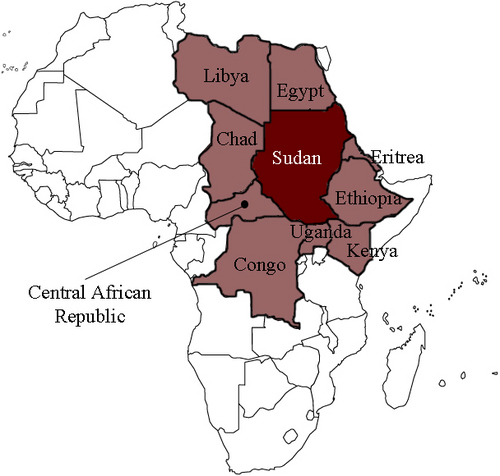
You might remember South Sudan being in the news in the early 2000s, when the long-running civil war in Sudan was resolved by splitting the African nation in two. The region’s troubles have not disappeared. Civil strife, disease, and poverty remain ever-present realities for the people of South Sudan. In the face of these hardships, some succumb to lives of dependency or despair. Others find a way to thrive. Among the latter is Joice—a mother, an entrepreneur, and a beacon of the resilience of the human spirit.
Compelled to begin working at age 14 to support her family after her father’s death, Joice barely finished her high school education. From the first, she exhibited a remarkable entrepreneurial drive. Not content with her menial job transporting vegetables to market, she used her modest savings to open her own business—a food stand—at age 15.
For a while, life was good. Joice married and her expanding business supported her growing family. Then the dream seemed to come crashing down. Her husband abandoned her. The civil war destroyed her business. Joice found herself homeless with seven young children and no means of support. She sank into discouragement and “cried and cried for days.” In these circumstances, some would surrender to the temptation to accept and even exploit their downtrodden status—to embrace victimhood as identity.
But Joice’s faith was unbroken. She would be defined not by what happened to her, but by how she responded. “Human struggle is the means for finding oneself,” Ismael Hernandez wrote in Not Tragically Colored. “By passing through the fires of adversity, a person is refined.” Through struggle, Joice’s faith and determination were refined. A devout Christian, she implored God to help her find a way forward. Then she did her part.
“By passing through the fires of adversity, a person is refined.”
Ismael Hernandez
With a small investment from relatives, she opened a small tea shop in South Sudan’s capital city, Juba. The shop was successful and gradually developed into a full-scale restaurant.
This success didn’t come easily. Besides the inevitable hard work, there are constant threats to the business’s operation. Her employees have to deal with harassment from local bullies, and she has to deal with harassment from tax collectors. Some customers eat and refuse to pay. She must be a canny negotiator with government officials, street boys bent on thievery, and food market vendors who are equally keen to make a profit.
But she has managed to hold it together. Today, Joice’s shop is a thriving eatery with sixteen employees. Joice works eighty hours a week to keep the business humming. On Sundays, she prays and sings and studies scripture.

The restaurant is a marvelous example of how business can contribute to the common good. Sixteen other vulnerable women have found a path out of poverty and into self-reliance by working for Joice. Four orphan boys get decent meals and a place to sleep by lodging in the restaurant and thereby serving as night watchmen. The community has a place to enjoy well-prepared food at a good price.
Joice’s story is proof that in the midst of suffering, destitution, and depravity, there is always hope and dignity. As the friend who related her story to me put it, “She has experienced the worst life can throw at her and has overcome each time.” She is a beautiful testament to the human capacity for flourishing, no matter how challenging the conditions.
The author acknowledges and thanks Gabe Hurrish of Maryknoll Lay Missioners for sharing Joice’s story.
You May Like

Resolutions are Better than Revolutions
With the New Year, come the New Year’s resolutions. Although the unlikelihood of persevering in such resolutions is so widely acknowledged that the whole idea has become a parody for some, the essential concept remains sound and beneficial. It is one expression of the impulse to reform. The custom of
Ford Foundation’s aim to ‘change philanthropy’ warps the true meaning of ‘justice’ and ‘generosity’
[ACTON INSTITUTE POWERBLOG] Justice and charity are the duty of all – and are intimately related – but a redefinition of philanthropy that collapses the distinction between them serves neither. The Ford Foundation gives over $500 million dollars annually, mostly in grants, to nonprofit organizations around the world. Foundation President Darren
Labor Can Heal
As is well known, for Karl Marx work was a source of alienation. In the Christian tradition, too, the Genesis account teaches that the hardship of toil is a result of sin. Everyone has some experience with work as drudgery, indignity, or burden. But there is another side of labor.